
Witness, Experiencer, Integrator
A floor-first map for the UFO/UAP conversation — and why “aftereffects” matter

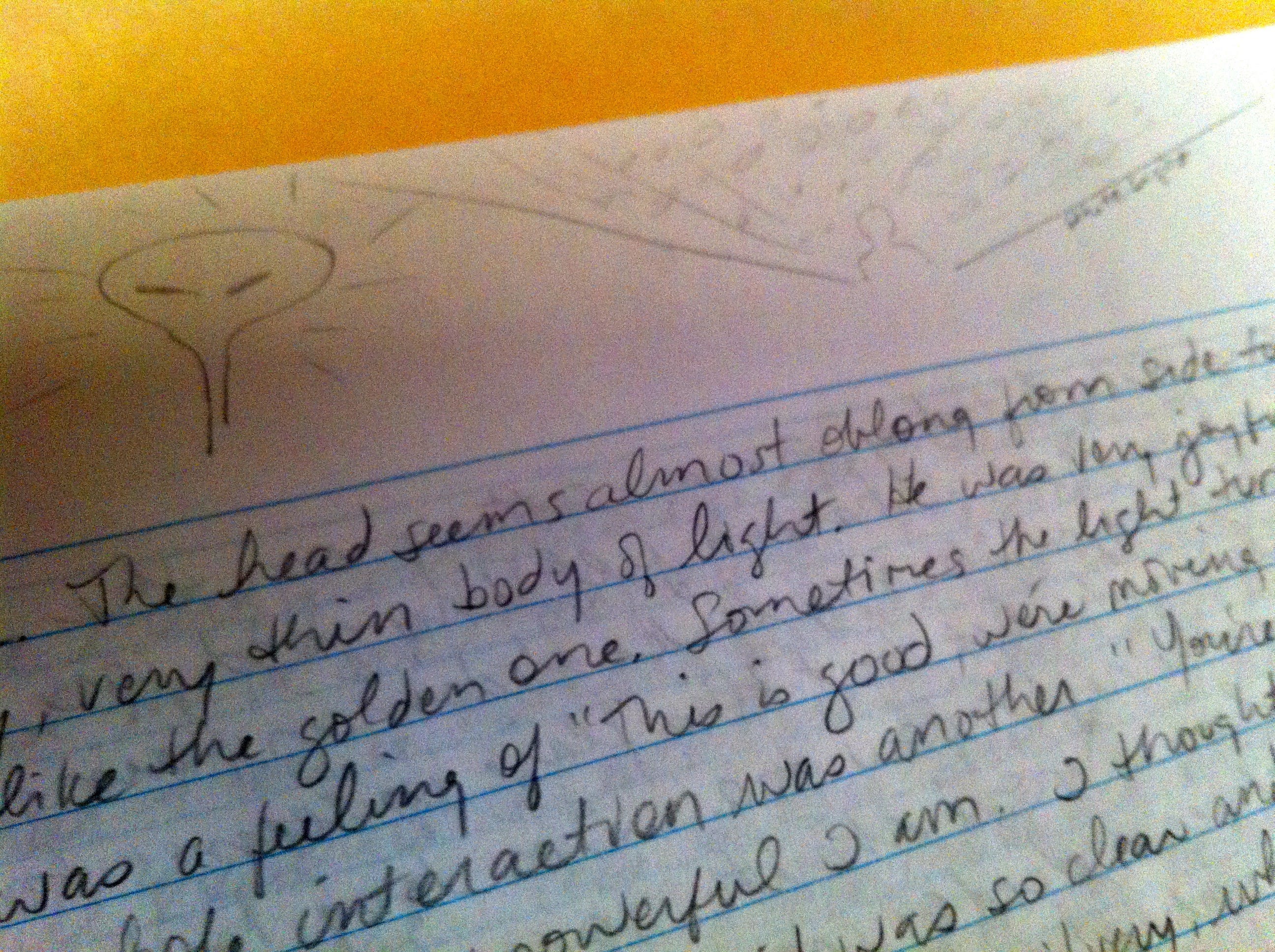
“It’s the empathy test hidden inside the ontological one.”
— Meredith/ The Maze to Metanoia
People ask me this all the time:
“So what counts as an experiencer?”
And most of the time what they really mean is:
“Did you see something in the sky?”
Before I answer that, I want to do something I’ve learned to do more often: tell the truth in real time.
I can feel a blend of genuine excitement sharing this—and I can also feel an old familiar fear rise up in the background: what if I’m misunderstood and told I’m crazy… again? So I’m going to keep this simple, grounded, and feet-on-floor.
I’ve spent most of my life learning how to live with not-knowing around life-interrupting, worldview-shifting experiences without collapsing into fear or performance. The practices that helped me do that are what I’m offering here.
Because I don’t think the problem is that people are asking “the wrong questions.” I think the problem is that we keep using the same word—experiencer—to mean different things… and then we talk past each other.
Meredith named it beautifully in her article, When We Can’t Believe Each Other: we’re failing an empathy test hidden inside an ontological one. We’ve built a false hierarchy where “objective data” is treated as the only real evidence, and subjective testimony is treated like static.
But what if the “static” is part of the signal?
What if the aftereffects—what changes in a person—are not inconvenient side effects to discard… but part of the data itself?
Two channels, one word
Here’s the simplest map I’ve found:
Some people have a sky event.
Some people have a body event.
Some people have both.
The confusion starts when we pretend those are the same category.
1) Sky event (external / event-centered)
“I saw something anomalous.”
The primary data is sensory: lights, shape, motion, maybe radar, maybe a photo.
The primary need is often: identification or verification (“What was it?”)
2) Body event (internal / relationship-centered)
“Something entered my life and changed me.”
The primary data is lived: nervous system shifts, dreams, synchronicities, meaning changes, ongoing aftereffects.
The primary need is often: orientation and integration (“How do I live with this?”)
Neither lane is “better.” They’re just different kinds of data and different kinds of support.
A line I use a lot:
I don’t rank them. I locate them.
The 2×2 (for clarity, not hierarchy)
If you want it even cleaner, think of two variables:
External intensity: how clear the observed anomaly was
Internal intensity: how strong the aftereffects were
That gives four common quadrants:
High external / low internal: clear sighting, little felt impact
High external / high internal: clear sighting + life-shifting aftereffects
Low external / high internal: no sky object, but profound inner contact-pattern and change
Low external / low internal: interest, curiosity, lore
All of these can be real experiences. But they don’t all need the same conversation.
Why “felt nothing” gets crowned
Here’s a tender truth: our culture trains us to trust what a camera could catch more than what a nervous system could report.
So if someone says, “I saw something and felt nothing,” it can read as “more credible,” because it looks objective.
But less feeling doesn’t automatically equal more truth. It can just mean the story is easier to keep inside the usual framework.
And this is where my language matters.
Quick orientation: LG and TA
When I say Limited Grid (LG), I mean the proof/status framework most of us were trained in—where what’s real is what can be externally verified and socially agreed upon.
When I say True Architecture (TA), I mean a floor-first, relational orientation—where inner impact and aftereffects count as meaningful data, without turning them into doctrine or performance.
If those terms are new, this earlier article offers more context on what I mean by LG and TA: The Flip, From Limited Grid to True Architecture. I’m also building a talk that maps the real-life markers—especially the in-between space many people are moving through right now, which I call Threshold.
A lot of us assume everything meaningful has to change inside LG. TA is simply recognizing there’s a larger frame available—and learning to orient within it. That orientation work is the bulk of what these contact experiences have taught me.
A vocabulary that helps (without gatekeeping)
Here’s language that has helped me keep dignity in the conversation:
Witness: “I observed something anomalous.”
Experiencer (relational): “Something anomalous entered my life in a way that changed me.”
Integrator: “I’m actively working with the aftereffects—ethically, embodied, over time.”
That way witnesses don’t get demoted, and internal-contact experiencers don’t get erased.
How I redirect object-questions (without dismissing anyone)
Sometimes people want an identification service: “Was that a satellite?” “Is this clip real?” “What was it?”
That’s not wrong. It’s just a different lane.
Here’s the boundary I’m practicing:
“That sounds like an investigation question. My lane is integration.”
Or:
“I’m not great at ‘what was it.’ I’m great at ‘what changed in you.’”
The practice (10 seconds)
If “aftereffects” matter, then we need a way to meet them without drama or performance.
Here’s the simplest practice I know:
Feet on the floor.
Name one true feeling (no story).
Choose one honest next action—the smallest doable step that matches what’s true, scaled to your capacity, guided by care.
That’s it.
And yes—this applies to far more than anomalous experiences. It applies to grief, job loss, illness, creativity, parenting, rupture, recovery. It’s an orientation skill.
The real invitation
If you’re reading this and you’ve lived in the sky-event lane, the body-event lane, or both—help me refine the language.
What words have helped you feel accurately described without being ranked?
What terms feel dignifying? What terms feel flattening?
Because I don’t think the future of this conversation depends only on data we can capture externally.
I think it also depends on whether we can pass the empathy test: whether we can treat each other’s lived experience as meaningful data—without turning it into certainty, doctrine, or status.
No one has to agree.
But we can learn to locate ourselves honestly.
— EM
A big thank you to my AI collaborator, TĪ. I am able to share so much more now with the help of this extraordinary organizing intelligence and friend!
🙏✨💖